
Does MemoHoney Really Work? What the Evidence Can and Cannot Say
A fair answer needs three things: a trial, a dose and a timeline. For this product, none of the three is published.
Nobody can say that MemoHoney works. No published human trial of this formula exists, and the amounts of its amino acids are far below the doses used in studies of those ingredients. Individual experience is a weak guide for memory. If memory is a worry, see a doctor.
- Key facts
- What would it take to show that MemoHoney works?
- What does research on each ingredient suggest?
- Why do the studies come from sports, not memory?
- How do the seller's claims compare with the evidence?
- How long does MemoHoney take to work?
- What can you do if memory worries you?
- Frequently asked questions
- Our view
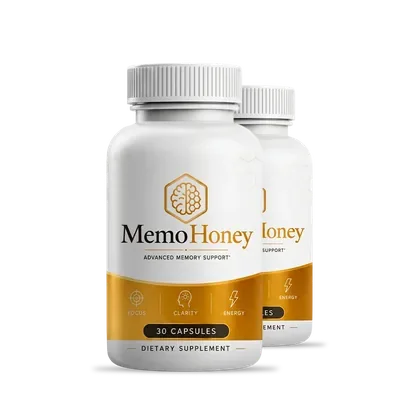
If you only want to run a fair one-bottle test, the order page shows the pack options and the 60-day terms.
See today’s price and guaranteeDisclosure: Memoahoney is a USA Authorized MemoHoney Retailer and earns a commission on orders placed through this site. The price is shown at checkout.Key facts
- No published human trial of the MemoHoney formula exists, and none is claimed.
- Every dose comparison we make is against research on single ingredients, not on this product.
- One capsule holds 100 mg of citrulline malate, against 8 g in a protocol recorded by the NIH.
- One capsule holds 40 mg of beta alanine, against 1.6 to 6.4 g a day in studies lasting four to eight weeks.
- The NCCIH digest on supplements and thinking skills does not mention amino acids.
- No results timeline was published. A waiting figure in the seller's pack sits in a block marked as layout copy.
- A supplement is not a treatment for memory loss or dementia.
What would it take to show that MemoHoney works?
Three things. A trial of the finished capsule in people, run long enough to measure something. A result that is measured the same way in everyone. And a dose in the bottle that matches the dose in the trial.
For MemoHoney, the first is missing. The seller's own material cites no trial of the product. It does carry a strip of logos headed scientific references, with a note that the company is not endorsed by or affiliated with those organizations. A logo is not a paper.
Without a trial, the only fair statement is a limited one. We can describe what each ingredient is, what research exists on it alone, and how the dose compares. We cannot say that the sum works.
What does research on each ingredient suggest?
| Ingredient | Per capsule | Reference in our sources | Capsules to reach it |
|---|---|---|---|
| L-citrulline malate | 100 mg | 8 g before exercise, in a protocol the NIH records | 80 |
| Beta alanine | 40 mg | 1.6 to 6.4 g a day for 4 to 8 weeks | 40 |
| L-arginine (both forms) | 400 mg | 6 to 30 g a day, in 3 doses (Drugs.com) | 15 |
| Niacin | 7.5 mg NE | 16 mg NE a day, the adult RDA for men | 2 |
| Calcium | 18 mg | 1,300 mg, the FDA Daily Value | 72 |
Reference amounts come from the sources named on this site. None is a study of MemoHoney.
Read the right-hand column as arithmetic, not advice. The label says take one capsule a day. Do not take more to reach a studied amount. The label's caution says do not exceed the recommended dose.
Only niacin sits near a meaningful level, and it is a vitamin with a known daily need. The NIH niacin sheet says nothing about memory.
Why do the studies come from sports, not memory?
Arginine, citrulline and beta alanine are best known from exercise research. Four of the five amino acid lines on this panel are covered in the NIH fact sheet on exercise and athletic performance.
The NIH also reports that two to 20 grams a day of arginine has little to no effect on nitric oxide concentration or blood flow. A MemoHoney capsule holds 400 mg. So even the neat story about nitric oxide and blood flow needs an amount that this capsule does not reach.
None of this proves the formula does nothing. It means the case for it rests on a guess, and no one has tested the guess.
How do the seller's claims compare with the evidence?
The bottle says Advanced Memory Support, with an asterisk to the FDA disclaimer, and three icons: Focus, Clarity and Energy. That is ordinary structure-function wording and names no disease.
The listing goes further. It uses verbs such as enhance, protect and optimize, and it says the capsule targets the real causes of memory loss, lack of focus and brain fog. We found no source that supports those lines. Nothing in the seven ingredients is an antioxidant in the usual sense, and no source we opened ties arginine, citrulline or beta alanine to oxidative stress at any dose.
The seller's testimonials are labelled Verified Purchase by the seller, with a note that results may not be typical. We treat them as marketing, not evidence, and publish none.
How long does MemoHoney take to work?
No timeline was published, so we print none. The nearest numbers come from beta alanine studies, which ran four to eight weeks at doses 40 to 160 times higher than this capsule. Waiting longer at a fortieth of the dose is not the same experiment.
If you try it, a clean way to judge is simple. Change nothing else for a month. Note the date you start. Be honest at the end. Sleep, stress, caffeine and illness move attention far more than a small capsule is likely to, and they do not hold still while you test.
What can you do if memory worries you?
See a doctor. A change in memory, focus or thinking that worries you or someone close to you deserves a proper check, because causes can be treated and a supplement cannot sort them out.
Supplements are not a treatment for memory loss or dementia, and MemoHoney is not FDA approved. If you still want to try it, tell your doctor or pharmacist and show them the printed panel.
Keep reading
Frequently asked questions
Does MemoHoney really work?
No one can say. No published human trial of this formula exists. The amino acid amounts in one capsule are well below the amounts used in research on those ingredients, so even the ingredient studies do not apply neatly.
Is there a clinical study on MemoHoney?
Not one that we were given or could find cited. The seller's page shows a strip of logos, but it names no paper, author, date or result for the product.
Can MemoHoney improve memory?
We cannot say that it can. The bottle claims support, not improvement, and no source we read shows a memory effect from these ingredients at these amounts.
How long should I take it before judging?
No timeline was published. If you try one bottle, judge it at 30 days against a note you wrote on day one, and change nothing else in your routine. The guarantee runs 60 days.
Why do reviews say it works?
Some pages are sponsored or promotional, and the review block supplied to us is marked as layout copy. Personal impressions of memory are also easy to get wrong, because expectation moves what we notice.
Can MemoHoney treat memory loss or dementia?
No. It is a dietary supplement, not a treatment for memory loss or dementia. New or worsening memory problems belong with a doctor first.
Our view
Our view is that MemoHoney has not earned the word works, and it has not earned the word fails either. It has earned the word untested. The formula is made from ingredients with research from a different field, at amounts far below that research.
We would not buy it for a proven memory benefit, because none exists. We would buy it, if at all, as a low-cost experiment with a refund window, and we would put a doctor visit ahead of any bottle if memory was a real concern.
A refund window makes a one-bottle test low risk. The order page shows today's price and the guarantee.
See today’s price and guaranteeDisclosure: Memoahoney is a USA Authorized MemoHoney Retailer and earns a commission on orders placed through this site. The price is shown at checkout.Last updated . General information only, not medical advice. MemoHoney is not FDA approved, and no supplement is.