Authorized: USA Authorized MemoHoney Retailer|30 capsules · one a day · 30 days|7 of 7 amounts printed · 665.5 mg declared|Lot MEM-26/ME-7647
MemoahoneyOfficial U.S. shop
Official product information

MemoHoney Official Website: Capsules for Memory Support

Quick answer

MemoHoney is a dietary supplement capsule for memory and cognitive support.

Use case: Adults who want to see every amount take one capsule a day with 8 oz of water, 20 to 30 minutes before a meal.

How it works: Five of the seven ingredients are amino acid compounds, L-arginine, L-citrulline and beta alanine, joined by niacin and calcium, with every amount printed.

Form CapsulesBottle 30 capsulesServing 1 capsuleSupply 30 daysAmounts printed 7 of 7
  • Every dietary ingredient carries a printed amount, with no proprietary blend
  • One capsule a day, 30 to a bottle, so each bottle is a month
  • Manufactured in the USA with globally sourced ingredients, as the label prints
  • A 60-day money-back guarantee, counted from purchase
Lot MEM-26/ME-7647 · read the label
Money back guarantee sealFDA registered facility sealFDA registered, second mark seal
Seller’s seals: what each one means
Accepted payment cardsPaid on the order page’s checkout
7 of 7
No proprietary blend anywhere on this label · what the amounts come to

Reviewed sheetBy the Memoahoney Editorial DeskReviewed by Dr. Judith Leone-Friedman, neuropsychologistRevised Our editorial method

Money back guarantee seal
Money back guarantee
FDA registered facility seal
FDA registered facility
GMP certified seal
GMP certified
Made in USA seal
Made in USA
GMO free seal
GMO free
All natural seal
All natural
Vegetarian friendly seal
Vegetarian friendly
Gluten free seal
Gluten free
Milk free seal
Milk free
Physician formulated seal
Physician formulated

What is MemoHoney? MemoHoney in sixty seconds

MemoHoney is a 30-capsule bottle sold for memory and cognitive support, at one capsule a day. Its Supplement Facts panel declares an amount for every ingredient, with no proprietary blend, which is rare.

Quick answer

MemoHoney is a 30-capsule bottle sold for memory and cognitive support, at one capsule a day. Start with what is unusual about it, because it is genuinely rare: the Supplement Facts panel declares an amount for every ingredient in the product. There is no proprietary blend, no total weight with the contents concealed inside it, and nothing marked with a dagger for want of a figure. Of the products this desk has reviewed, this is the first with a full house, and the label around it is careful in the same way: serving size and servings per container both printed, a complete other-ingredients line, a four-part caution panel, a storage instruction, a correctly qualified country-of-origin statement and a boxed FDA disclaimer. Then do the arithmetic that the disclosure makes possible, because that is the whole of the rest of this site. The seven declared amounts come to 665.5 mg per capsule. Five of the seven are amino acids from the exercise shelf, and the doses our sources record for them are measured in grams: 6 to 30 grams a day for arginine, 1.6 to 6.4 grams a day for beta-alanine, 8 grams of citrulline malate in the protocol the NIH describes. Against those, one capsule is a fifteenth, a fortieth and an eightieth. None of that is hidden from you. All of it is printed, which is exactly why we can tell you.

What is in MemoHoney? Form, dose, price and returns at a glance

MemoHoney is a capsule, 30 to a bottle, taken one a day. Its seven ingredients all have printed amounts. No pack price was published to us, so the checkout shows it, and a 60-day guarantee runs from purchase.

Every line below is read off the printed label or the material supplied with it. On this product, unusually, almost every row has an answer.

Last checked September 24, 2026. Lot MEM-26/ME-7647, certificate MEM-7647-26-ME.
DetailWhat the label and the seller say
ProductMemoHoney, a memory and cognitive support supplement in capsules
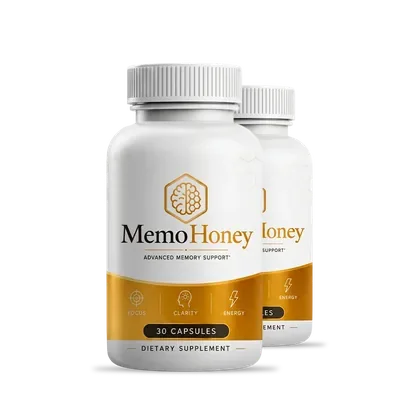
Front of bottleMemoHoney · Advanced Memory Support · Focus · Clarity · Energy · 30 Capsules · Dietary Supplement
Net quantity30 capsules
Serving size1 capsule
Servings per container30
Supply per bottle30 days at the label's own dose
Suggested useTake one (1) capsule daily with an 8 oz. glass of water. For best results, take 20-30 minutes before a meal.
Dietary ingredients declaredSeven, and all seven carry a printed amount
Proprietary blendNone. There is no blend on this label
Total declared per capsule665.5 mg — our addition, from the seven printed figures
Other ingredientsHypromellose (vegetable capsule), vegetable stearate, silicon dioxide
Caution panelPresent and complete — four separate instructions including the tamper seal
StorageStore in a cool, dry place away from heat and light
Country of originManufactured in the USA with globally sourced ingredients — correctly qualified
Distributed byInstituto Experience, PO Box 12730, Ogden, UT 84404, with a telephone number and an email printed on the bottle
PriceNot published to us. Shown at checkout
Cost per dayCannot be published without a price — but the denominator is 30, which is more than most products manage
Guarantee60 days from purchase unless the sales page prints a longer window
Returns950 Third Avenue, Floor 7, New York, NY 10022. Buyer pays return shipping
Order deskListed in the footer, by phone or email
Verified reviewsNone. The supplied block is marked as layout copy in its own document

Where to buy MemoHoney: the official order desk

Ordering here puts your MemoHoney order with the order desk listed in the footer and applies the 60-day window to it. The price is whatever the checkout prints, and we publish no figure we have not seen.

Ordering here puts your order with the order desk listed in the footer and applies the 60-day window to it. Price is whatever the checkout prints; we publish no figure we have not seen.

Add To Cart

What does the MemoHoney label get right?

It prints an amount for every dietary ingredient. A proprietary blend declares one total weight and no individual figures, but the MemoHoney panel has none, so anyone can add it up with a calculator.

Because it would be dishonest to lead with anything else.

On almost every product this desk reviews, the review is shaped by an absence. A proprietary blend declares one total weight for a list of ingredients and prints no individual figures, so the most anyone can honestly say is what each ingredient does in the literature and that nobody can tell how much of it is in the capsule.

That is not the situation here.

The MemoHoney Supplement Facts panel declares seven dietary ingredients and prints an amount for every one of them. Niacin 7.5 mg NE. Calcium 18 mg. L-arginine base 200 mg. L-arginine AKG 2:1 extract 200 mg. L-citrulline HCl 100 mg. L-citrulline malate 100 mg. Beta alanine 40 mg. Serving size, one capsule. Servings per container, thirty.

The FDA's own labeling guide states the requirement in one sentence: “You must list the names and quantities of dietary ingredients present in your product, the ‘Serving Size’ and the ‘Servings Per Container.’” This panel does all three, for all seven, with nothing hidden.

The rest of the label is careful in the same way. A complete other-ingredients line that names the capsule material rather than leaving it to be guessed. A four-part caution panel including the tamper-seal instruction most labels omit. A storage line. A country-of-origin statement in the qualified form the FTC describes. A boxed FDA disclaimer on the same wrap as the claim it disclaims. A distributor block with a telephone number and an email on it.

We have given this label five out of five for panel completeness, which is the first five this desk has awarded on any line. And then we did the arithmetic it makes possible, which is what the rest of this page is about.

Why the good news comes first

Because full disclosure is the thing we ask for on every other product, and when a brand delivers it the honest response is to say so before saying anything else. What follows is not a retraction of that. It is what disclosure is for.

How many MemoHoney capsules would reach the dose the research used?

The label says one capsule a day. To reach the amounts our sources record you would need 2 capsules for niacin, 15 for arginine and 80 for citrulline. This arithmetic is possible only because every figure is printed.

One capsule a day is the label's instruction. Each row below draws the number you would actually have to swallow to reach the amount our sources record — arithmetic that is only possible because every figure is printed.

  1. Niacin

    7.5 mg per capsule

    2 capsules to reach 16 mg a daySource: NIH: the RDA for adult men is 16 mg NE

    The one row on this page that is not absurd, and we want to say so plainly. Two capsules would cover an adult man's daily niacin, and one covers about half of it. Most people already get niacin from food — the NIH puts the adult Tolerable Upper Intake Level for supplemental niacin at 35 mg, and says flushing typically begins at 30 to 50 mg — so 7.5 mg is a modest, sensible top-up rather than a pharmacological dose. It is also the only ingredient in this bottle you could describe that way.

  2. L-Arginine, all forms

    400 mg per capsule

    15 capsules to reach 6 g a daySource: Drugs.com: current daily dosage trends range from 6 to 30 g

    The capsule carries 200 mg of L-arginine base plus 200 mg of L-arginine AKG 2:1 extract. Counting every milligram of both as arginine — which is generous, because the AKG fraction is not arginine — the capsule holds 400 mg.

    The monograph we read puts current daily dosage trends at 6 to 30 grams, in three divided doses. Fifteen capsules is the bottom of that. And the NIH's own view of arginine is bleaker still: doses of 2 to 20 g a day have “little to no effect on performance,” and little to no effect on nitric oxide concentration or blood flow either.

  3. Beta-alanine

    40 mg per capsule

    40 capsules to reach 1.6 g a daySource: NIH: studies used 1.6–6.4 g/day over 4–8 weeks

    Forty capsules is the bottom of the studied range. The top of it, 6.4 grams, would be a hundred and sixty.

    There is a silver lining and it is worth stating: the NIH records that beta-alanine causes moderate to severe paresthesia — tingling, prickling or burning lasting 60 to 90 minutes — at doses of at least 800 mg. At 40 mg you will feel nothing at all, which is both a genuine comfort and the clearest possible sign of where this amount sits.

  4. Calcium

    18 mg per capsule

    72 capsules to reach 1,300 mg a daySource: FDA: the Daily Value for calcium is 1,300 mg

    Seventy-two capsules for one day's calcium. This is not a criticism of the formulation — nobody buys a memory supplement for its calcium — but it is the reason the printed 1.5% matters: the honest figure is 1.4%, and a nutrient under 2% of its Daily Value is at the level the regulations let a label describe as negligible.

    Calcium carbonate is also one of the most common capsule fillers there is. We are not claiming that is what it is doing here; we are noting that 18 mg is not a calcium supplement by any definition.

  5. L-Citrulline Malate

    100 mg per capsule

    80 capsules to reach 8 g a daySource: NIH: one protocol used 8 g citrulline malate before exercise

    Eighty capsules. Eighty.

    The NIH also gives the conversion: citrulline malate is 56.64% citrulline by weight, so the 100 mg in this capsule is about 57 mg of citrulline. The capsule carries a further 100 mg of L-citrulline HCl, and none of the sources we opened gives a conversion for the HCl salt, so this site does not invent one.

    This is the row that decides the product. Citrulline is the ingredient in this formula with the best claim to doing something, and the bottle holds roughly one eightieth of a studied dose per capsule.

What that means

Two of those five rows are fine: the niacin is a sensible half-day top-up and the calcium is negligible either way. The other three are the product. Nothing here was concealed from you — every number in the left column is printed on the bottle, which is precisely how we were able to produce the right one.

7 of 7amounts printed
665.5 mgdeclared per capsule
80capsules to a studied citrulline dose
30 daysone bottle, one a day

MemoHoney Daily Value: the two printed percentages, recomputed

The panel prints a percent Daily Value for two of its seven ingredients. Niacin at 47% is correct. Calcium prints 1.5%, but 18 mg against the 1,300 mg Daily Value is 1.4%, or 1% to the nearest whole percent.

This panel prints a percent Daily Value for two of its seven ingredients. We checked both against the FDA's published figures.

Our own arithmetic, against the FDA’s published Daily Values. Last checked September 24, 2026.
NutrientDeclared% DV printedDaily ValueOur figureVerdict
Niacin7.5 mg NE47%16 mg NE46.9%, which to the nearest whole percent is 47%correct
Calcium18 mg1.5%1,300 mg1.4%, which to the nearest whole percent is 1%the printed figure is neither the correct value nor a whole percent
Why we bother

A percentage on a panel is the one number a reader can check without leaving the label, and almost nobody does. We recompute every one we find. On this product there were two to check: one is right and one is not.

What the rule says

The FDA’s dietary supplement labeling guide requires percentages to be expressed “to the nearest whole percent”. 1.5% is not a whole percent, and 1.4% rounds to 1% rather than to 1.5% in any case.

How much it matters

Very little, on its own. Eighteen milligrams of calcium is negligible either way and nobody’s decision turns on it. It matters as a signal: this is the only figure on an otherwise careful panel that does not survive a recalculation, and we would rather report it than quietly let it pass.

MemoHoney label findings: six things on this wrap

The printed MemoHoney wrap has use, storage, caution, origin and distributor on the left, the front panel in the centre and Supplement Facts on the right. The first finding is that seven lines carry seven figures, with no blend.

The MemoHoney bottle: a white 30-capsule bottle with a gold band carrying the honeycomb mark, the Advanced Memory Support line and the Focus, Clarity and Energy icons
The printed MemoHoney wrap. Left: use, storage, caution, origin and the distributor block. Centre: the front panel. Right: the Supplement Facts panel.
Finding 01

Every dietary ingredient carries an amount

Seven lines, seven figures, no blend. This is the finding.

We have written some version of the amounts are not published on every product this desk has reviewed. Here they are, printed on the bottle, where a buyer can read them before paying.

Finding 02

The serving is one capsule, and the supply is thirty days

Serving Size: 1 Capsule. Servings Per Container: 30.

A single-unit serving means no multiplication is needed to read any other line on the panel, and thirty capsules at one a day is thirty days with no arithmetic at all. It is the cleanest supply figure this desk has had to work with in months.

Finding 03

The niacin percentage is right; the calcium percentage is not

Niacin: 7.5 mg NE against a 16 mg NE Daily Value is 46.9%, which to the nearest whole percent is 47%. That is what the panel prints. Correct.

Calcium: 18 mg against a 1,300 mg Daily Value is 1.4%, which to the nearest whole percent is 1%. The panel prints 1.5% — neither the correct value nor a whole percent.

Finding 04

The formula is from a different shelf

Arginine, arginine AKG, two citrulline salts and beta-alanine are the standard contents of a pre-workout supplement. Four of the five appear in the NIH's fact sheet on exercise and athletic performance.

NCCIH's digest on supplements and cognitive function reviews ginkgo, omega-3s, vitamin E, curcumin and B vitamins. It does not mention amino acids at all.

Finding 05

The country-of-origin wording is better than its own badge

The label prints Manufactured in the USA with globally sourced ingredients — the qualified construction the FTC describes.

The listing then carries two unqualified Made in USA roundels, which the FTC reserves for products “all or virtually all” made in the United States. Where the two differ the label governs, and here the label is the better of the two.

Finding 06

The telephone number on the bottle is not this site's order desk

The distributor block prints a number with a 507 area code. The brief supplied for this site gives a different one, listed in the footer, for refunds and order questions.. The brief supplied for this site gives the order desk (its number is in the footer) for orders and refunds.

Both are in the pack and they are different. For an order placed here, use the number on this site: that is the desk with your order record.

How do you read the MemoHoney Supplement Facts panel?

Read it in six ways: disclosure, arithmetic, scale, category, the photographs and the name. The first two show what the label does well: 7 of 7 ingredients carry a printed amount.

Tab through them. The first two are about what the label does well; the rest are about what that lets you see.

7 of 7
ingredients carry a printed amount

Disclosure

This is the reading that matters most and it is the one in the product's favour.

There is no proprietary blend on this label. Every dietary ingredient has a number beside it. Nothing is concealed inside a total, nothing is described only as part of a matrix, and the panel can be added up by anyone who can use a calculator.

On the last four products this desk reviewed, the central complaint was that the amounts were missing. Here they are all present. Whatever else this page says, that is real and it deserves saying first.

MemoHoney ingredients: the panel, exactly as printed

MemoHoney ingredients per capsule are niacin 7.5 mg NE, calcium 18 mg, L-arginine 200 mg, L-arginine AKG 200 mg, L-citrulline HCl 100 mg, L-citrulline malate 100 mg and beta alanine 40 mg. We add them to 665.5 mg.

Seven lines, seven figures, and a total we added ourselves.

Transcribed from the printed Supplement Facts panel at native resolution. One capsule per serving, thirty servings to the container. Last checked September 24, 2026.
As printed on the panelPer capsule% Daily ValueWhat it is
Niacin7.5 mg NE47%Vitamin B3. About half an adult day's requirement, and the only nutrient here at a sensible fraction of its Daily Value
Calcium (as Calcium Carbonate)18 mg1.5%1.4% of a day's calcium by our arithmetic. Carbonate is also a common capsule filler
L-Arginine (base)200 mg††An amino acid the body converts to nitric oxide. Studied at 6 to 30 grams a day
L-Arginine AKG 2:1 Extract200 mg††Arginine bound to alpha-ketoglutarate. Our sources do not cover this form separately
L-Citrulline HCl100 mg††A citrulline salt. Citrulline raises arginine in the blood more reliably than arginine does
L-Citrulline Malate100 mg††56.64% citrulline by weight, per the NIH. Studied at 8 grams before exercise
Beta Alanine40 mg††Studied at 1.6 to 6.4 grams a day for four to eight weeks, for muscular endurance
Total declared per capsule665.5 mg—Our addition, from the seven printed figures. The label prints no total and is not required to.
What is not on this panel

There is no proprietary blend. Seven dietary ingredients are declared and every one of them carries a figure. Nothing is concealed inside a total weight, nothing is described only as part of a matrix, and no ceiling arithmetic is needed anywhere on this site. Of the products this desk has reviewed, this is the first with a full house.

The footnote

†† Daily Value (DV) not established.

Other ingredients

Three, as printed: Hypromellose (Vegetable Capsule), Vegetable Stearate and Silicon Dioxide.

The two percentages, recomputed

Niacin: 7.5 mg NE against a 16 mg NE Daily Value is 46.9%, which to the nearest whole percent is 47% — the printed figure is correct. Calcium: 18 mg against a 1,300 mg Daily Value is 1.4%, which to the nearest whole percent is 1%. The panel prints 1.5%.

Six figures worth knowing about the MemoHoney bottle

Six figures sum up the bottle, starting with 7 of 7 ingredients carrying a printed amount. There is no proprietary blend and nothing hidden. Every claim below is sourced to the reference list at the foot of this page.

Every claim below is sourced to the reference list at the foot of this page, and every one of those sources was opened and read.

7 of 7

Ingredients with a printed amount

Every dietary ingredient on this panel carries a figure. There is no proprietary blend and nothing hidden inside a total. That single fact is what makes every other number on this site possible, and it is the strongest thing about this product.

665.5 mg

Total declared per capsule

Niacin 7.5 mg, calcium 18 mg, arginine 200 mg, arginine AKG 200 mg, citrulline HCl 100 mg, citrulline malate 100 mg, beta-alanine 40 mg. The label does not print a total; we added the seven lines it does print.

80

Capsules to reach a studied citrulline dose

The NIH records a protocol using 8 grams of citrulline malate. This capsule holds 100 milligrams of it. Eighty capsules is two and two thirds bottles, taken in a day.

40

Capsules to reach a studied beta-alanine dose

The NIH records 1.6 to 6.4 grams a day over four to eight weeks. This capsule holds 40 milligrams. At the top of that range it would be a hundred and sixty capsules.

4

Photographed ingredients not in the product

The product scene is staged with four recognised brain-health botanicals. None of them is on the panel and the brand claims none of them in writing. NCCIH says there is no conclusive evidence that ginkgo prevents or slows cognitive decline.

0 mg

Honey in a product called MemoHoney

Seven dietary ingredients and three other ingredients, and honey is not among the ten. The name, the honeycomb logo and the dripping-honey artwork all point at something the bottle does not contain.

See the full Supplement Facts panel for every line on the label.

MemoHoney dose vs research: one capsule against the dose the research used

Five rows compare one capsule with a published dose, each on its own linear scale. Every bar is a real printed number against a real published dose. Niacin, at 7.5 mg against the 16 mg NE adult RDA, comes closest.

Five rows, each on its own linear scale. Every bar is a real printed number against a real published dose — no ceilings, no blanks, no estimates.

Niacin — 7.5 mg per capsule against 16 mg NE a day, the adult RDANiacin16 mg NE a day, the adult RDA7.5 mg per capsule — 47% of it in one capsuleCalcium — 18 mg per capsule against 1,300 mg a day, the FDA Daily ValueCalcium1,300 mg a day, the FDA Daily Value18 mg per capsule — 72 times smallerL-Arginine, both forms — 400 mg per capsule against 6 g a day, the bottom of current dosage trendsL-Arginine, both forms6 g a day, the bottom of current dosage trends400 mg per capsule — 15 times smallerBeta Alanine — 40 mg per capsule against 1.6 g a day, the bottom of the studied rangeBeta Alanine1.6 g a day, the bottom of the studied range40 mg per capsule — 40 times smallerL-Citrulline Malate — 100 mg per capsule against 8 g before exercise, in the protocol NIH recordsL-Citrulline Malate8 g before exercise, in the protocol NIH records100 mg per capsule — 80 times smaller

One capsule, as printedA dose that makes senseWhat the research usedmilligrams, one linear scale per row

Each row has its own linear scale, so the track is always the dose our sources record and the bar is always what one capsule delivers. Reading the bars against each other would be meaningless; reading each bar against its own track is the comparison a buyer actually needs.
Rows that could be drawn5 of 5

Every bar on this chart is a real printed number against a real published dose. There are no ceilings here, no blanks and no estimates, because this label declares an amount for every ingredient in the product. That is what full disclosure buys a reader: not a flattering picture, but a checkable one. Four of the five bars are slivers, and you can see that they are slivers only because the brand printed the figures.

What is inside MemoHoney? Everything we know about the contents

Ten cards cover the contents, and the first is the good news: all 7 of 7 ingredients are quantified. The label prints an amount for every single dietary ingredient, with no proprietary blend and no total weight to hide behind.

Scroll or use the arrows. Ten cards, and the first one is the good news.

MemoHoney label explained: the wrap label, annotated

Sixteen markers cover the whole MemoHoney wrap, and most are about lines the label prints properly, such as the suggested use, the storage line and a complete caution panel. Tap a dot to read each one.

Sixteen markers across the whole wrap. Most of them are about lines this label prints properly.

The annotated MemoHoney label with sixteen numbered markers across the left panel, the front panel and the Supplement Facts panel

Swipe the label sideways to reach every marker.

Tap a numbered marker on the label to read what that line says, and what it leaves out.

Is there honey in MemoHoney? A honeycomb, a bee, and no honey

No. The brand name, the honeycomb logo and the dripping-honey artwork point at honey, but the panel lists seven dietary ingredients and the other-ingredients line lists three, and honey is not among the ten.

The brand is called MemoHoney. The mark is a hexagonal honeycomb cell with a brain inside it. The ingredient artwork is drawn on a ground of dripping honey with a bee in the middle of it.

The panel lists seven dietary ingredients. The other-ingredients line lists three. Honey is not among the ten.

We want to be proportionate about this. Nobody buys a memory capsule for its honey content, no material fact turns on it, and a brand name is allowed to be evocative rather than literal — nobody expects a Mustang to contain a horse.

But this site's whole method is to read what is printed and report what it says, and two things are printed here. The name says honey. The panel says arginine, arginine AKG, two citrulline salts, beta-alanine, niacin and calcium carbonate.

There is a second count in the same picture. The artwork is headed six named ingredients and shows six tiles. The panel declares seven — this artwork omits the calcium, and so does the written brief. Nothing is concealed, because the panel governs and it lists all seven. But a buyer who reads the artwork instead of the bottle has seen six of the seven.

The honest version of this section

The naming is marketing and the panel is the record. If the two disagree, believe the panel — which on this product is unusually easy advice to follow, because the panel actually tells you everything.

The brand's Inside MemoHoney artwork, six molecule tiles on a honeycomb ground
The brand’s own ingredient artwork. Count the tiles, then count the panel.

What does MemoHoney claim? Every claim on the pack

The pack says Advanced Memory Support, and its supports panel shows four tiles, from overall cognitive health to long-term brain health, focus and concentration. This is structure and function wording, and the page checks where each claim lives.

The brand's listing artwork setting out the four things MemoHoney is said to support, beside a photograph of a woman reading at a desk
The brand’s own supports panel, reproduced as supplied. Four tiles: overall cognitive health; protection from oxidative stress and mental clarity; neural communication and brain performance; long-term brain health, focus and concentration.

Where the claims actually live

The bottle carries one: Advanced Memory Support, asterisked to a boxed FDA disclaimer on the same wrap. Memory is a normal body function, support is the permitted verb and no disease is named, so as regulated writing it is correctly built.

The listing is where the sentences get longer. Enhance, protect, improve, boost, optimize — five verbs that promise more than support does, still without naming a disease.

And in the box beside the bottle sits a bonus titled 101 Herbal Cures, on a product whose own disclaimer says it is not intended to cure anything. Each of these is taken separately below.

Advanced Memory Support

The front-panel claim, asterisked to a boxed FDA disclaimer on the same wrap. Memory is a normal body function, support is the permitted verb and no disease is named, so as regulated wording this is correctly built. What sits behind it is five amino acid lines from the exercise-supplement shelf, at amounts between a fortieth and an eightieth of what the research used.

Focus · Clarity · Energy

Three icons across the gold band, none asterisked individually and none naming a disease. The only ingredient with a recognised energy-metabolism role is the niacin, at about half an adult day's requirement.

Enhance memory function and support overall cognitive health

Enhance is a stronger verb than support and the sentence uses both. No disease is named, so it stays inside structure-function wording. NCCIH's digest on supplements and cognitive function does not mention amino acids.

Protect the brain from oxidative stress and improve mental clarity

<span class='t-warn'>The hardest-worked line in the pack.</span> Protect is a verb of prevention and improve is a verb of outcome. Nothing in the seven printed ingredients is an antioxidant in the ordinary sense, and none of the sources we opened attaches an oxidative-stress effect to arginine, citrulline or beta-alanine at any dose, let alone at these.

Boost neural communication and promote better brain performance

Nitric oxide is a genuine signalling molecule, so there is a mechanism story available here — but it needs an amount. The NIH reports that 2 to 20 grams a day of arginine has little to no effect on nitric oxide concentration or blood flow. This capsule holds 400 milligrams.

Support long-term brain health and improve focus and concentration

Long-term brain health is the sort of phrase that sits just short of a disease claim without crossing into one. No published human trial exists on this formula, and no outcome is measured anywhere in the material we were given.

Optimize neurotransmitter production and contribute to a sharper, more agile mind

Nothing on this panel is a neurotransmitter precursor in the sense the sentence implies. Arginine and citrulline feed the nitric oxide pathway, which is vascular rather than neurotransmitter synthesis.

101 Herbal Cures

<span class='t-warn'>A bonus e-book supplied with this product, and the word is cures.</span> The product's own boxed disclaimer states it is “not intended to diagnose, treat, cure or prevent any disease.” 21 CFR 101.93 lists statements in material accompanying a product among the ways a disease claim may be made. We are not lawyers and this is not a legal opinion; it is a comparison between two things that arrive in the same box.

The Super Gut Code

A second bonus, about the gut, on a memory product. Nothing on this panel relates to digestion.

Sleep Live Better

A third bonus, about sleep. Nothing on this panel relates to sleep, and the label's own suggested use is a morning dose.

10-Day Active Mind Challenge

The one bonus whose subject matches the product. Brain-training exercises are not a claim about the capsule and we have no view on the booklet's contents, which we were not sent.

Personalized Usage Guide

A fifth bonus. The label's own suggested use is one sentence long and already complete, so it is not clear what this personalises.

100% Support Guaranteed

A roundel with a percentage and no object. It is not a money-back figure — the separate gold roundel carries that, and the brief puts the window at 60 days from purchase.

Does MemoHoney work? Six cards on what the evidence says

No published human trial exists on the finished MemoHoney capsule. Each card names a source and gives its exact words, including the parts that do not flatter the product. Tap a card to see it.

Front of the card: what it is. Tap it over for the named source and the exact words, including the parts that do not flatter the product.

MemoHoney ingredients artwork: how the brand pictures them

The brand's Inside MemoHoney artwork shows six molecule tiles on a ground of dripping honeycomb, headed six named ingredients. The printed panel declares seven, because this artwork omits the calcium.

Three images from the supplied set, captioned with what is actually in them.

The brand's own Inside MemoHoney artwork
The brand's own Inside MemoHoney artworkSix molecule tiles on a ground of dripping honeycomb, headed six named ingredients. The printed panel declares seven — this artwork omits the calcium. Note also that the honey in the background is decoration: there is no honey in the product.
The product scene, and what is in it
The product scene, and what is in itRead the props: ginkgo leaves, lion's mane mushrooms, blueberries and a herb sprig. Four of the most recognised brain-health botanicals on the shelf, and none of the four is on the panel. NCCIH's position on ginkgo is that there is no conclusive evidence it prevents or slows cognitive decline.
The bottle against a glowing brain
The bottle against a glowing brainProduct photography, published as that. A rendered brain behind a bottle is an illustration of the category, not a finding about the capsule.
What that means

Look at the props in the product scene. Ginkgo, lion's mane, blueberries and a herb sprig are four of the most recognised brain-health botanicals there are, and not one of them is on the panel. On ginkgo specifically, NCCIH writes that there is no conclusive evidence it is efficacious in preventing or slowing dementia or cognitive decline — so the photograph is borrowing recognition from a botanical that would not have carried the claim even if it were in the bottle.

Where the MemoHoney ingredients were first studied

Five of the seven MemoHoney ingredients are amino acid compounds: L-arginine, L-arginine AKG, L-citrulline HCl, L-citrulline malate and beta-alanine. Four of those five have a substantial entry in the NIH fact sheet on exercise and athletic performance.

Set the amounts aside for a moment and look only at what the ingredients are.

Five of the seven declared ingredients are amino acid compounds: L-arginine, L-arginine AKG, L-citrulline HCl, L-citrulline malate and beta-alanine.

Four of those five have a substantial entry in the NIH's fact sheet on dietary supplements for exercise and athletic performance. That is where the dose figures on this site come from, because that is where the research lives. Arginine and citrulline feed the nitric oxide pathway, which widens blood vessels; beta-alanine buffers muscle acidity and is studied for endurance. These are the contents of a pre-workout scoop.

NCCIH's digest on dietary supplements and cognitive function, dementia and Alzheimer's disease reviews ginkgo, omega-3s, vitamin E, curcumin and B vitamins. It does not mention amino acids at all.

There is a mechanism story available here and we should be fair about it: nitric oxide is a genuine signalling molecule and cerebral blood flow is a genuine thing. But the NIH's own summary of arginine is that 2 to 20 grams a day has “little to no effect on nitric oxide concentration, blood flow, or exercise metabolites” — and this capsule holds 400 milligrams counting both forms.

So the story needs a dose it does not have, in a research literature that is about muscles rather than memory.

What this section is not saying

It is not saying the ingredients are unsafe or that the label is dishonest. Everything in the capsule is declared and the claim on the bottle is ordinary structure-function wording. It is saying that the formula comes from a different aisle than the bottle does.

Is MemoHoney good? What is good about it, and what is not

The label is the good part: every amount is printed, there is no proprietary blend and the caution panel is complete. The weak part is the doses, which are far below the amounts used in the research.

The left column is the longest this desk has written. So is the right one, and they are about different things.

What is good about MemoHoney

  • Every dietary ingredient carries a printed amount. Seven of seven, no proprietary blend anywhere on the label.
  • Serving size and servings per container are both printed, and the serving is a single capsule, so no multiplication is needed to read any line.
  • Thirty capsules is thirty days — a supply figure with no arithmetic and no ambiguity.
  • The niacin percentage is arithmetically correct. We recalculated it against the FDA's 16 mg NE Daily Value.
  • The caution panel is complete, with four separate instructions including the tamper-seal line most labels leave out.
  • The other-ingredients line names the capsule material rather than hiding it behind a phrase like proprietary base.
  • The country-of-origin wording is correctly qualified — better than its own listing badge.
  • The FDA disclaimer is boxed and complete, on the same wrap as the claim it disclaims.
  • A telephone number and an email are printed on the bottle, beside a named distributor.
  • The niacin is at a sensible dose: about half an adult day's requirement, well under the upper limit, far below the flushing threshold.
  • A 60-day money-back guarantee, and a one-bottle pack that finishes with the window still half open.

What is not

  • Eighty capsules to reach the citrulline malate dose the NIH records. The label says one.
  • Forty capsules to reach the bottom of the studied beta-alanine range; a hundred and sixty to reach the top of it.
  • Fifteen capsules to reach the bottom of the arginine range in the monograph we read.
  • The formula is from the exercise shelf, and NCCIH's cognition digest does not mention amino acids at all.
  • No published human trial exists on this formula.
  • The calcium percentage does not survive a recalculation: 1.4% printed as 1.5%.
  • A cardiac caution that is not on the label. Our source says arginine is not recommended following acute myocardial infarction, and warns about nitrates.
  • Ginkgo, lion's mane and blueberries in the photographs, and none of them in the bottle.
  • No honey, in a product called MemoHoney.
  • A bonus e-book titled 101 Herbal Cures, on a product whose own disclaimer rules out curing anything.
  • Two unqualified Made in USA badges beside a label that qualifies the claim properly.
  • A physician formulated mark with no physician named anywhere.
  • A third-party tested mark with no laboratory, report number or certificate.
  • A PO Box rather than a street address for the distributor.
  • No price, and no verified customer feedback.

Who MemoHoney is for, and who should ask a doctor first

MemoHoney may suit adults who want a label they can actually read. Ask a doctor first if your memory has slipped recently or is getting worse, or if family and friends have noticed a change.

MemoHoney may suit you if

You want a label you can actually read

This is the honest case for the product, and it is a real one. Every dietary ingredient carries a printed amount, the serving is a single capsule, the servings per container are stated, the other-ingredients line is complete and the caution panel is properly worded. If you are tired of proprietary blends, this label is the opposite of one.

You want a simple once-a-day capsule

One capsule, with water, in the morning. Thirty in a bottle, so a bottle is thirty days with no arithmetic. The supply question that takes three paragraphs on most products takes one line here.

You are short of niacin and want a modest top-up

7.5 mg NE is about half an adult day's requirement, well under the 35 mg upper limit for supplemental niacin, and far below the 30 to 50 mg where flushing starts. As vitamin doses go it is sensible.

You avoid gelatin

The capsule is hypromellose, named on the label rather than left to be guessed at, and the listing carries a vegetarian mark. The other two excipients are vegetable stearate and silicon dioxide.

You want a seller you can telephone

A US order desk (its number is in the footer), an office and a returns address in New York, an order email, and a second telephone number and email printed on the bottle itself. That is more contact detail than most products in this category publish.

You are prepared to try one bottle and judge it

Thirty capsules is thirty days, the guarantee is sixty, and one bottle finishes with the window still half open. As trial arrangements go this one is unusually clean.

Skip MemoHoney if

You are buying it for the ingredient doses

This is the central problem and it is visible precisely because the label discloses everything. Eighty capsules to reach a studied citrulline malate dose. Forty to reach the bottom of the beta-alanine range. Fifteen to reach the bottom of the arginine range in the monograph we read. The label says one.

You have had a heart attack

The monograph we read is direct: “L-arginine is not recommended following acute myocardial infarction.” One trial was stopped early after 8.6% of the arginine group died against none in the control group. The label's caution panel covers this only through its general known medical condition clause.

You take nitrates or blood pressure medicine

“Caution is warranted in patients concomitantly using L-arginine supplementation and nitrates.” Arginine's effect on insulin and cholesterol-lowering drugs is described as unpredictable, and hypotension may occur because of its vasodilatory effect.

You expected a botanical nootropic

The photographs show ginkgo, lion's mane and blueberries. The panel shows none of them. If those are what you were shopping for, this is not the bottle.

You expected honey

There is none. Seven dietary ingredients, three other ingredients, and honey is not among the ten.

You are pregnant, nursing or under 18

The label's own caution panel says to consult a physician first, and the brief says adults 18 and over.

You want evidence that this formula works

There is no published human trial on it. NCCIH's digest on supplements and cognitive function reviews ginkgo, omega-3, vitamin E, curcumin and B vitamins and does not mention amino acids at all.

Should I buy MemoHoney? Five questions before you order

Answer five short questions to see whether to speak to a doctor first. Nothing you answer leaves your browser. Two of the five are about the heart, and that is deliberate.

Nothing you answer leaves your browser. Two of the five are about the heart, and that is deliberate.

0 of 5 answered

Are you 18 or older?
Have you ever had a heart attack, or do you take nitrates?
Do you take prescription medicine of any kind?
Are you pregnant or nursing?
Are you buying this to reach a particular ingredient dose you have read about?

MemoHoney side effects: a good caution panel, and one thing it does not say

The caution panel is printed in full and says not to exceed the recommended dose. The one thing it does not say concerns L-arginine, which the sources we read say is not recommended after a heart attack.

Everything here is sourced. Nothing here is medical advice, and none of it replaces the clinician or pharmacist who knows what else you take.

Begin with the label, because on this product the label does its job. The caution panel is printed in full: Do not exceed recommended dose / Pregnant or nursing mothers, children under the age of 18 and individuals with a known medical condition should consult a physician before using this or any dietary supplement / Keep out of reach of children / Do not use if safety seal is damaged or missing Four instructions, properly worded, including the tamper-seal line most labels omit.

The arginine. This is the specific thing worth knowing, and it is the strongest caution on this site. The professional monograph we read states plainly: “L-arginine is not recommended following acute myocardial infarction.” It records a trial terminated early because 8.6% of patients in the L-arginine group died, while no deaths occurred in the control group.

The same source adds: “Caution is warranted in patients concomitantly using L-arginine supplementation and nitrates,” because arginine may potentiate the effects of nitroglycerin and similar medicines. Its effects on insulin and cholesterol-lowering drugs are described as unpredictable, and hypotension may occur because arginine is a vasodilator. Reported adverse reactions include nausea, diarrhea, dyspepsia, palpitations, headache and numbness.

Why that matters here. This is a memory supplement. Its audience is older adults, a proportion of whom have had a cardiac event or take nitrates. The label's caution panel covers them only through its general known medical condition clause, which is correct as far as it goes and does not name the interaction.

The rest is reassuring. Beta-alanine's characteristic effect is tingling, and the NIH puts the threshold at at least 800 mg — twenty times what this capsule holds, so nothing will be felt. Niacin flushing typically begins at 30 to 50 mg and this capsule declares 7.5 mg NE, well under the 35 mg upper limit for supplemental niacin. The calcium is negligible. Nothing in the other-ingredients line is unusual.

And one genuine advantage of full disclosure. On every other product this desk has reviewed, we have had to tell readers that their pharmacist would have nothing to look at. Here you can photograph the panel and hand over seven real numbers.

The one line we would add to this label

A sentence naming the arginine caution. Ask your doctor before use if you have had a heart attack or take nitrates. It would cost nothing, it is specific to this formula, and on a product aimed at this audience it is the most useful thing a caution panel could say.

MemoHoney dose table: what one capsule holds, against what the research used

The middle column is printed on the bottle and the right column comes from a named source we opened. For example, citrulline malate is 100 mg per capsule against an 8 g protocol, which would take 80 capsules.

Every figure in the middle column is printed on the bottle. Every figure on the right is from a named source we opened.

From the printed panel and the sources at the foot of this page. Nothing in this table is an estimate.
IngredientPer capsuleWhat our sources recordCapsules to reach it
Niacin7.5 mg NE16 mg NE a day, the adult RDA2
Calcium (as calcium carbonate)18 mg1,300 mg a day, the FDA Daily Value72
L-Arginine, base plus AKG400 mg6–30 g a day in three divided doses15
L-Citrulline HCl100 mgno conversion for this salt in our sources—
L-Citrulline Malate100 mg8 g before exercise, in the protocol NIH records80
Beta Alanine40 mg1.6–6.4 g a day over 4–8 weeks40
The whole capsule665.5 mg declared——
The whole bottle30 capsules——

How to take MemoHoney, as the label describes

Take one capsule daily with an 8 oz glass of water. For best results, take it 20 to 30 minutes before a meal. A bottle holds 30 capsules, so one a day lasts thirty days.

Four steps. Two are the label's own words and two are ours, marked as such.

  1. Take one capsule with a full glass of water

    From the label: As a dietary supplement, take one (1) capsule daily with an 8 oz. glass of water. One a day, thirty in a bottle, thirty days.

  2. Take it 20 to 30 minutes before a meal

    Also the label's: For best results, take 20-30 minutes before a meal with 8 oz of water or as directed by your healthcare professional — the label’s own words. The written brief shortens this to in the morning; the bottle is the instruction that governs.

  3. Photograph the panel before the first capsule

    Ours. On this product that is actually worth doing, because the panel carries seven real numbers your pharmacist can use. Ask specifically about the arginine if you have had a cardiac event or take nitrates.

  4. Store it cool, dry and out of the light

    The label's own instruction. No temperature is given, so use the ordinary reading: a cupboard rather than a windowsill or a bathroom shelf.

How long does a MemoHoney bottle last? Work out your own supply

One bottle is 30 capsules at one capsule a day, which is thirty days. Change the pack size in the planner to see where a bottle lands against the 60-day guarantee.

Fixed to the label's own serving of one capsule a day. Change the pack size to see where a bottle lands against the 60-day guarantee.

Pack size

Capsules a day — fixed at one, which is what the label says

1bottles in the pack
30capsules in total
30days at one a day
Yesfinishes inside the 60-day window

A doctor-first MemoHoney check before you order

Speak to a doctor first if your memory has slipped recently or is getting worse, or family and friends have noticed a change. The right card is about the order itself. Show the label to your doctor before the first capsule.

Read the left card first. If any line describes you, show the label to your doctor before the first capsule; the right card is about the order itself.

Speak to a doctor first if

  • your memory has slipped recently, is getting worse, or family and friends have noticed a change (MedlinePlus, memory loss)
  • you take medicine for blood pressure, a nitrate, a blood thinner or another vasodilator; the seller names these, and arginine and citrulline act on blood vessels
  • you take a multivitamin or B-complex: each capsule carries 7.5 mg NE of niacin, and adults should stay under 35 mg a day from supplements (NIH niacin fact sheet)
  • you are pregnant or nursing, under 18, or have a known medical condition, as the label’s caution panel asks

Sudden confusion, slurred speech, a drooping face or weakness on one side can be a stroke. Call 911 straight away.

Then the order

  • The dose is one capsule a day with 8 oz of water, 20 to 30 minutes before a meal; the label says do not exceed it
  • The guarantee runs 60 days from purchase, not from delivery
  • Returns go to the New York returns address with your full name, email and order ID inside the parcel
  • Keep the order confirmation email: the order desk asks for its order ID before anything else

MemoHoney price and packs: what each pack is in days

One bottle is 30 capsules, a thirty-day supply, and the price is shown at checkout. No figure was published to us in advance. The 60-day guarantee is still half open when one bottle ends.

One bottle
30 days
30 capsules
MemoHoney, 1 bottle of 30 capsules
Priceshown at checkout
No figure was published to us in advance
  • One 30-capsule bottle, one capsule a day
  • Thirty days, and the 60-day guarantee is still half open when it ends
  • The pack we would buy on this product
  • Price shown at checkout
Order Now
Accepted payment cards
Two bottles
60 days
60 capsules
MemoHoney, 2 bottles of 30 capsules
Priceshown at checkout
No figure was published to us in advance
  • Two bottles, 60 capsules, 60 days
  • Finishes exactly as the 60-day window closes
  • The pack that matches the guarantee to the day
  • Price shown at checkout
Order Now
Accepted payment cards
Three bottles
90 days
90 capsules
MemoHoney, 3 bottles of 30 capsules
Priceshown at checkout
No figure was published to us in advance
  • Three bottles, 90 capsules, 90 days
  • The brief records three bottles as the most common pack; the same document says its order counts are layout copy
  • Thirty days past the refund window
  • Price shown at checkout
Order Now
Accepted payment cards
Six bottles
180 days
180 capsules
MemoHoney, 6 bottles of 30 capsules
Priceshown at checkout
No figure was published to us in advance
  • Six bottles, 180 capsules, 180 days
  • Four months past the point where you could change your mind
  • We would not commit six months to a formula with no trial behind it
  • Price shown at checkout
Order Now
Accepted payment cards

No price was published to us. We print no figure we have not seen ourselves. · Returns run on the listing’s window, not a seller guarantee · What that actually means

MemoHoney cost per day: the half of the price sum we can supply

No pack price was published to us and we print none. The denominator is fixed, though: one capsule a day, thirty capsules a bottle, thirty days a bottle. Divide any checkout price by the days in the pack.

No price, as usual. But for once the denominator is there.

No pack price was published to us and we print none. Pack prices are the ones the info page shows at checkout, which is the usual gap and the reason price clarity scores 1.5 out of 5 on our card.

What is unusual is the other half. A cost per day needs a number of days, and here there is one. One capsule daily, thirty capsules per bottle, thirty days. So the moment you see a figure at the checkout you can divide it: a one-bottle price by 30, a two-bottle price by 60, three by 90, six by 180.

That sounds trivial. It is not. On the four products this desk reviewed before this one, the serving size was either ambiguous or missing, and a cost per day could not be calculated at all even once a price was known. Here the arithmetic is waiting for one number.

There is also a comparison this product permits that most do not: you can price it per milligram. Every amount is declared, so a pack price divided by 30 capsules and again by 665.5 mg gives a real cost per milligram of declared ingredient, and that figure can be compared with any other fully disclosed product on the shelf.

What we would do

Buy one bottle. Thirty capsules is thirty days and the sixty-day guarantee is still half open when it runs out, which is as clean a trial arrangement as this category offers.

Where to buy MemoHoney, and what each route means

This site, memoahoney.com, is a USA Authorized MemoHoney Retailer. Your order goes to the order desk with the 60-day window attached. A marketplace listing is a different seller, and we cannot see or refund that order.

1

This desk

memoahoney.com, the USA Authorized MemoHoney Retailer. Your order goes to the order desk listed in the footer, with the 60-day window attached and an order ID that desk can look up.

2

A marketplace listing

We cannot see the order, refund it, or tell you anything about storage or handling in a third-party chain. The other seller's policy is the only one that applies, and it may not be sixty days.

3

A link in an email or a message

Check any price offered that way against the checkout here before entering a card. We do not send price emails and we never paste tracking or affiliate links into our pages.

MemoHoney badges and seals, assessed

Sixteen marks are published as supplied, with what each one does and does not establish. The only mark with a number behind it is money back: 60 days from purchase, unless the sales page prints a longer window.

Sixteen marks, published as supplied, with what each one does and does not establish.

Money back
Money backThe only mark in the set with a number behind it: 60 days from purchase per the brief, unless the sales page prints longer. A purchase policy, not a medical promise.
FDA registered facility
FDA registered facilityAn administrative filing about a factory. The FDA “does not have the authority to approve dietary supplements before they are marketed”. No facility named, no number given, and this mark is on the listing rather than the bottle.
FDA registered, again
FDA registered, againA second registration roundel making the same administrative point in a different style.
GMP certified
GMP certifiedA process standard about how a plant runs. No certifying body named, no certificate supplied.
Made in USA
Made in USAUnqualified, and in conflict with the bottle. The label prints Manufactured in the USA with globally sourced ingredients, which is the correctly qualified wording the FTC describes.
USA manufacturing
USA manufacturingA second unqualified origin mark on the listing, with the same problem.
GMO free
GMO freeNo certifying body named. Five of the seven ingredients are synthesised amino acid compounds, so the claim has little to bite on here.
All natural
All naturalNatural has no regulatory definition for a supplement. This formula is five isolated amino acid compounds, a mineral salt and synthesised niacin.
Vegetarian friendly
Vegetarian friendlyThe badge the printed label actually supports: a hypromellose capsule with vegetable stearate and silicon dioxide.
Gluten free
Gluten freeNothing on the printed list is a gluten source. No certifying body named, no test supplied.
Milk free
Milk freeConsistent with the printed list, and again with no body named.
Physician formulated
Physician formulatedNo physician is named anywhere in the supplied material. Two images in the pack show an unnamed white-coated figure; we published neither.
100% support guaranteed
100% support guaranteedA percentage with no object attached to it. Not the refund figure.
Pure guaranteed
Pure guaranteedPure has no defined meaning here, and no certificate of analysis was supplied.
Satisfaction guarantee
Satisfaction guaranteeA third guarantee mark pointing at the same 60-day purchase policy.
Third-party tested
Third-party testedNo laboratory named, no report number, no certificate supplied.
What that means

Exactly one of them carries a number: the 60-day money-back guarantee. The rest name no certifying body and supply no certificate, and two of them — physician formulated and third-party tested — point at a person and a laboratory that are not named anywhere in the material we were given.

MemoHoney bonuses: the five bonus e-books

Five bonus e-books are published as they came, with what each one is about. One title uses a medical word, which matters on material that accompanies a supplement. We note it so you can judge the bonuses yourself.

Published as they came, with what each one is about.

101 Herbal Cures
101 Herbal CuresThe word is cures, on material accompanying a product whose own boxed disclaimer says it is not intended to cure any disease. 21 CFR 101.93 lists statements in accompanying material among the ways a disease claim may be made.
The Super Gut Code
The Super Gut CodeA bonus about the gut, supplied with a memory supplement. Nothing on this panel relates to digestion.
Sleep Live Better
Sleep Live BetterA bonus about sleep. Nothing on this panel relates to sleep, and the label's own suggested use is a morning dose.
10-Day Active Mind Challenge
10-Day Active Mind ChallengeThe one bonus whose subject matches the product. Brain-training exercises are not a claim about the capsule, and we were not sent the contents.
Personalized Usage Guide
Personalized Usage GuideA fifth bonus. The label's own suggested use is one sentence and already complete.
What that means

Three of the five are about subjects the panel does not touch — herbs, the gut and sleep. The first one is the problem: the word is cures, on material accompanying a product whose own boxed disclaimer says it is not intended to cure any disease.

MemoHoney reviews: why there are no customer reviews on this site

The material supplied with MemoHoney has a review block with a star score, review and order counts and eight named buyers. We do not show it, because its source note marks it as layout copy, not real customers.

What we were given, and why it is not on this page

The material supplied with MemoHoney does contain a review block: a star score, a count of written reviews, a count of orders, a recommendation percentage and eight named buyers with ages, cities, pack sizes and day counts.

Its own source note says, in as many words, that the reviews, star scores and order counts in that pack are layout copy only — placeholder content for designing a page, not feedback from people who bought this product.

So we do not print it. Not as reviews, not as a rating in the header, not as an order count, and not as a “% would recommend” figure. Publishing invented testimonials is the one thing this desk will not do, whatever it costs in conversion.

What a real review set looks like

Individual experiences, collected after purchase, attributable to an order, and published unedited including the bad ones. Where we have had one on this desk, we have printed it in full and said who supplied it.

Why a star rating is worth so little here

A number with no verifiable set behind it is decoration. Any site can print 4.7 out of 5. What you can check is the label, and the label pages on this site are where the evidence actually is.

If you have taken it

Write to the website inbox listed in the footer. We will publish what people actually send us, good and bad, marked as unverified, and we will say how many we have. Until then this page stays as it is.

Which MemoHoney images this site uses, and which it leaves out

We left out eleven photographs: portraits of identifiable people presented as customers, a portrait presented as a named expert, and a white-coated figure holding the bottle. Product and label images are used instead.

Eleven photographs we did not publish

The asset pack for this product contains portrait photographs of identifiable people presented as customers, a portrait whose file name presents its subject as a named expert, and a white-coated figure holding the bottle whose file name presents him as a doctor of this brand.

Beside them sits a review block that the same pack describes, in its own words, as layout copy only. Putting those two things together would mean attaching invented praise to real faces, and printing a credential for a clinician who is named nowhere in any document we were given.

So none of the following appears anywhere on this site — not as reviews, not as illustration, and not as decoration:

  • blue-toned-polaroid-desktop-1-2
  • blue-toned-polaroid-mobile-1-2
  • mark-expert
  • red-toned-magnific-hyperrealistic-commercial-uyh8y7hwny

What this costs us: the most persuasive material in the pack. It is still the only defensible call, and we would rather show you the list of what we left out than quietly use it. Every other file in the pack — forty-six of them, including the ones that do not flatter the product — is published somewhere on this site.

MemoHoney refund: how the 60-day guarantee works, step by step

The guarantee runs sixty days from purchase unless the sales page prints a longer window. Keep the order email, then call the order desk before you post anything. The order ID is the first thing the desk will ask for.

Sixty days from purchase unless the sales page prints a longer window.

  1. Keep the order email

    It carries the order ID, which is the first thing the desk will ask for, and the date the 60 days run from.

  2. Call the order desk before you post anything

    Start the claim on the phone with the order ID. An unexpected parcel is harder to match to an order at the other end. Note that this is the site's desk, not the number printed on the bottle.

  3. Put your details in the box

    Full name, the email address on the order and the order ID, written on a sheet inside the parcel.

  4. Send it with tracking, at your own cost

    To 950 Third Avenue, Floor 7, New York, NY 10022. Return shipping is paid by the buyer. Keep the tracking number until the refund lands.

  5. Expect two separate windows

    Three to five business days for the desk to credit it once the return is processed, then five to ten days for the money to appear on the card.

Fifteen MemoHoney details the seller has not published

Fifteen details were not published, including any human trial on this formula, a pack price and a cost per capsule. Every dose comparison on this site is against research on single ingredients, not on MemoHoney itself.

  • Any published human trial on this formula. None exists, and none is claimed. Every dose comparison on this site is against research on single ingredients.
  • A price. No pack price was published to us. Pack prices are the ones printed at checkout on the info page.
  • A cost per capsule or per day. Cannot be published, because no price was.
  • The arginine content of the AKG 2:1 extract. The ratio is printed but none of our sources converts it, so this site does not.
  • The citrulline content of the HCl salt. The NIH gives the conversion for citrulline malate, 56.64%, and none for the hydrochloride.
  • Any standardisation or assay figure. Amino acids are single compounds so this matters less than on a botanical, but no purity or assay statement is printed.
  • A certificate of analysis. The brief gives the reference MEM-7647-26-ME and says in its own words that it is a draft label, not lab proof.
  • The name of the third-party laboratory behind the tested mark on the listing.
  • The name of the physician behind the physician-formulated mark.
  • A street address for the distributor. The label prints a PO Box in Ogden, Utah.
  • An expiry date. The brief says the lot and best-before appear on the base of the bottle when the bottle shows them.
  • Shipping cost, speed and international availability. None was published.
  • Verified customer reviews. The supplied review block is marked as layout copy in its own source document, so this site publishes no star rating and no order count.
  • Any evidence for the oxidative stress claim. Nothing in the seven printed ingredients is an antioxidant in the ordinary sense and no source we opened attaches an antioxidant effect to any of them.
  • Any honey. Not on the panel and not in the other-ingredients line.

Where MemoHoney sources contradict each other, and what we did

Eight places differ between the label, the brief and the artwork. One example is the telephone number: the bottle prints a number with a 507 area code, while the order desk number in the footer is different. The table lists each conflict.

ConflictWhat we did
The telephone number on the bottle is not the order number on this siteThe label prints a number with a 507 area code beside the distributor block. The brief supplied for this site gives a different one, listed in the footer, as the sales and refund desk. beside the distributor block. The brief supplied for this site gives the order desk (its number is in the footer) as the sales and refund desk. Both are real numbers in the pack and they are different. Use the one on this site for orders placed here, because that is the desk with the order record; the number on the bottle belongs to the distributor.
The brief's dose is shorter than the label'sThe brief says take 1 capsule daily with a glass of water, preferably in the morning before a meal. The label says take one (1) capsule daily with an 8 oz. glass of water. For best results, take 20-30 minutes before a meal with 8 oz of water or as directed by your healthcare professional — the label’s own words. Same dose, but the label specifies the volume, the window and the deferral to a clinician. The label governs.
The marketing names six ingredients; the panel declares sevenThe Inside MemoHoney artwork is headed six named ingredients and the written brief lists the same six. Both omit the calcium, which is on the printed panel at 18 mg. Nothing is concealed — the panel is the document that governs and it lists all seven — but a buyer reading only the artwork has seen six of seven.
The printed calcium percentage does not survive a recalculation18 mg against the FDA's 1,300 mg Daily Value is 1.4%, which to the nearest whole percent is 1%. The panel prints 1.5%. The niacin percentage on the same panel is correct.
An unqualified Made in USA badge sits beside a correctly qualified labelThe bottle says Manufactured in the USA with globally sourced ingredients. The listing carries two unqualified Made in USA roundels. The FTC reserves the unqualified claim for products that are “all or virtually all” made in the United States.
The photographs show four ingredients the product does not containGinkgo leaves, lion's mane mushrooms, blueberries and a herb sprig are staged around the bottle in the product scene. None is on the panel and the brand claims none of them in writing.
The brand name points at an ingredient that is not in the bottleMemoHoney, a honeycomb logo, dripping-honey artwork and a bee. No honey on the panel and none in the other-ingredients line.
A bonus e-book uses a word the product's own disclaimer rules outThe product's boxed disclaimer says it is not intended to cure any disease. A bonus supplied with it is titled 101 Herbal Cures. 21 CFR 101.93 lists statements in accompanying material among the ways a disease claim may be made.

MemoHoney review score: 2.4 out of 5

Our score for MemoHoney is 2.4 out of 5. Panel completeness scores a full 5.0, the first this desk has awarded on that line. Dose against the evidence scores half a mark, and the average carries both.

Panel completeness
Every dietary ingredient carries a printed amount. No proprietary blend, no hidden total. The first five this desk has awarded on this line.
5.0
Label construction
Serving size, servings per container, a complete other-ingredients line, a four-part caution panel, a storage line, a correctly qualified origin statement, a boxed FDA disclaimer and a distributor block with a telephone number and an email. Half a mark off for the PO Box and for the calcium percentage.
4.5
Arithmetic on the label
The niacin percentage is correct. The calcium percentage is not: 1.4% printed as 1.5%. One error out of two, on the smaller number.
4.0
Dose against the evidence
Fifteen capsules for the bottom of the arginine range, forty for the bottom of the beta-alanine range, eighty for a studied citrulline malate dose. The label says one a day. The half mark is for the niacin, which is sensibly dosed.
0.5
Evidence for the category
No published human trial on this formula. The ingredients are from the exercise shelf, and NCCIH's cognition digest does not mention amino acids at all.
0.5
Claim discipline
The bottle's own claim is ordinary structure-function wording. The listing reaches further with protect and improve, and a bonus e-book uses the word cures.
2.0
Marketing honesty
Ginkgo, lion's mane and blueberries in the photographs and none in the bottle; a honeycomb brand with no honey; a physician-formulated mark with no physician named.
1.5
Price clarity
No price published in advance. Pack prices appear at checkout only, so no comparison is possible before the decision to click.
1.5
Overall2.4 / 5

2.4 out of 5. This is the best label this desk has read and one of the weakest formulas, and those two sentences are the same sentence. Full disclosure is what lets anybody see that a capsule holding 100 mg of citrulline malate is an eightieth of a studied dose; a proprietary blend would have hidden exactly that. We would rather review this product than any of the four before it, and we would not buy it for the reason it is sold.

MemoHoney research sources, in full

These are the sources behind this page, including the FDA Daily Value table and the NIH fact sheets. The Daily Value for niacin is 16 mg NE and for calcium 1,300 mg, used to recompute both printed percentages.

  1. U.S. Food and Drug Administration. Daily Value on the Nutrition and Supplement Facts Labels. The Daily Value for niacin is 16 mg NE and for calcium 1,300 mg. Used to recompute both printed percentages on this panel. View source
  2. U.S. Food and Drug Administration. Dietary Supplement Labeling Guide, Chapter IV: Nutrition Labeling. “You must list the names and quantities of dietary ingredients present in your product, the ‘Serving Size’ and the ‘Servings Per Container.’” Percentages must be expressed “to the nearest whole percent”, and an ingredient with no Daily Value takes a symbol referring to the footnote Daily Value Not Established. View source
  3. National Institutes of Health, Office of Dietary Supplements. Dietary Supplements for Exercise and Athletic Performance. Arginine: doses of 2–20 g/day have “little to no effect on performance” and little to no effect on nitric oxide concentration or blood flow. Citrulline: one protocol used 8 g citrulline malate before exercise, and citrulline malate is 56.64% citrulline by weight. Beta-alanine: 1.6–6.4 g/day over 4–8 weeks, with paresthesia at doses of at least 800 mg lasting 60–90 minutes. View source
  4. National Institutes of Health, Office of Dietary Supplements. Niacin. Adult RDA 16 mg NE for men and 14 mg NE for women; Tolerable Upper Intake Level 35 mg for supplemental niacin; “Thirty to 50 mg or more nicotinic acid typically causes flushing.” The fact sheet contains nothing on niacin and cognition. View source
  5. Drugs.com professional monograph, L-arginine. “Current daily dosage trends range from 6 to 30 g orally in 3 divided doses.” “L-arginine is not recommended following acute myocardial infarction” — one trial ended early after 8.6% of the arginine group died against none in the control group. “Caution is warranted in patients concomitantly using L-arginine supplementation and nitrates.” Reported adverse reactions include nausea, diarrhea, dyspepsia, palpitations, headache and numbness. View source
  6. National Center for Complementary and Integrative Health. Dietary Supplements and Cognitive Function, Dementia, and Alzheimer’s Disease: What the Science Says (NCCIH’s digest for clinicians). On ginkgo, which appears in this product’s photographs but not on its panel: “There’s no conclusive evidence that Ginkgo biloba is efficacious in preventing or slowing dementia or cognitive decline.” The digest reviews ginkgo, omega-3s, vitamin E, curcumin and B vitamins, and does not mention amino acids. View source
  7. U.S. Food and Drug Administration. Questions and Answers on Dietary Supplements. “FDA does not have the authority to approve dietary supplements before they are marketed.” A firm is responsible for ensuring its products are not adulterated or misbranded, and FDA advises consumers to talk to a doctor or pharmacist before using a supplement. View source
  8. Federal Trade Commission. Complying with the Made in USA Standard. An unqualified claim requires that the product be “all or virtually all” made in the United States, with “no — or negligible — foreign content”. A qualified claim describes the extent, amount or type of domestic content or processing. View source
  9. Electronic Code of Federal Regulations, 21 CFR 101.5 — Food; name and place of business of manufacturer, packer, or distributor. The label must specify the name and place of business; the street address may be omitted “if it is shown in a current city directory or telephone directory”; and a firm that did not manufacture the product must use a qualifying phrase such as Distributed by. View source
  10. Electronic Code of Federal Regulations, 21 CFR 101.9(c)(8)(iii). The increment rule for expressing percent Daily Values on a Nutrition Facts panel, read alongside the supplement guide’s nearest-whole-percent instruction when we recomputed the two figures on this label. View source

Every source above was opened and read. Studies that found nothing are included on purpose.

MemoHoney FAQ: questions people ask

These answers cover what MemoHoney is, its ingredients, how to take it, whether it works, safety, side effects, FDA status, honey, price and the 60-day guarantee. Each one is based on the printed label.

What is MemoHoney?

MemoHoney is a dietary supplement in capsules, sold for memory and cognitive support. One bottle holds 30 capsules and the label's suggested use is one capsule daily with an 8 oz glass of water, 20 to 30 minutes before a meal. The Supplement Facts panel declares seven ingredients and prints an amount for every one.

What are the MemoHoney ingredients?

Each capsule holds niacin 7.5 mg NE, calcium 18 mg, L-arginine base 200 mg, L-arginine AKG 200 mg, L-citrulline HCl 100 mg, L-citrulline malate 100 mg and beta alanine 40 mg. The other ingredients are a hypromellose vegetable capsule, vegetable stearate and silicon dioxide. Every amount is printed, with no proprietary blend.

How do I take MemoHoney?

The label says take one capsule daily with an 8 oz glass of water. For best results, take it 20 to 30 minutes before a meal, or as directed by your healthcare professional. A bottle holds 30 capsules, so one capsule a day lasts thirty days.

Does MemoHoney work for memory?

No published human trial exists on the finished MemoHoney capsule, and none is claimed. The doses are far below the amounts used in research on single ingredients: reaching the studied amount of arginine would take 15 capsules a day, and citrulline 80. The label itself claims only Advanced Memory Support.

Is MemoHoney FDA approved?

No. MemoHoney is a dietary supplement, and dietary supplements are not FDA approved before they are sold. Its label claim, Advanced Memory Support, is structure and function wording. The label states it is manufactured in the USA with globally sourced ingredients.

Is MemoHoney safe?

Nothing in the seven printed ingredients is exotic, and the caution panel on the bottle is complete. The specific thing to know is about arginine: the source we read says it is not recommended after a heart attack and calls for caution with nitrates. If either applies to you, ask a clinician first.

What are the side effects of MemoHoney?

The bottle carries a complete caution panel, and the label says not to exceed one capsule a day. L-arginine is not recommended after a heart attack and calls for caution alongside nitrates, so ask your doctor first if either applies. The niacin, at 7.5 mg NE, is far below the 30 to 50 mg at which flushing typically starts.

Should I check with a doctor before starting MemoHoney?

Yes, if your memory has changed recently or keeps getting worse, if family or friends have noticed a change, or if you take medicine for blood pressure, a nitrate or a blood thinner. Pregnant or nursing mothers and anyone under 18 should also ask, as the caution panel says. Sudden confusion or trouble speaking means calling 911.

Is there honey in MemoHoney?

No. The panel lists seven dietary ingredients and the other-ingredients line lists three, and honey is not among the ten. The name, the honeycomb logo and the dripping-honey artwork all point at something the bottle does not contain.

Where can I buy MemoHoney, and is this the official website?

This site is run by the Memoahoney Editorial Desk, a USA authorized MemoHoney retailer in New York. Its order buttons open the seller's secure checkout, where the pack and the price are shown before you pay. Tracking, changes and refunds go through the order desk listed in the footer.

How much does MemoHoney cost?

No pack price was published to us, so we print none. The price is whatever the secure checkout shows before you pay. One capsule a day means a bottle is thirty days, so any price divides cleanly into a cost per day: the pack price divided by thirty times the number of bottles.

What is the MemoHoney money-back guarantee?

Sixty days from purchase, unless the sales page prints a longer window. It is counted from purchase, not from delivery. Keep the order email, then call the order desk with your order ID before you post anything back. The guarantee is a purchase policy, not a medical promise.

Ready to try MemoHoney? Order from the official website

One bottle is 30 capsules at one a day, so a bottle is thirty days. The 60-day guarantee runs from purchase, not from delivery, and the price is shown at checkout.

One bottle is 30 capsules at one a day, so a bottle is thirty days and the 60-day guarantee still has thirty left to run when it ends. The guarantee runs from purchase, not from delivery, and the price is shown at checkout.

Order NowRead the label firstNo price was published to us. We print no figure we have not seen ourselves. · 60-day guarantee from purchase · Not for under 18, pregnancy or nursing
MemoHoney · 30 capsules7 of 7 amounts printed · 30 days · price shown at checkout
Order Now