
At native resolution
The supplied label image is 1259 by 567 pixels. Every line on this page was read at that resolution, and the facts panel was enlarged three times over to read the amounts and the salt forms character by character.
Written by the Memoahoney Editorial Desk · Reviewed by Dr. Judith Leone-Friedman, neuropsychologist · Revised
Read off the supplied label photograph at native resolution, not retyped from marketing copy.
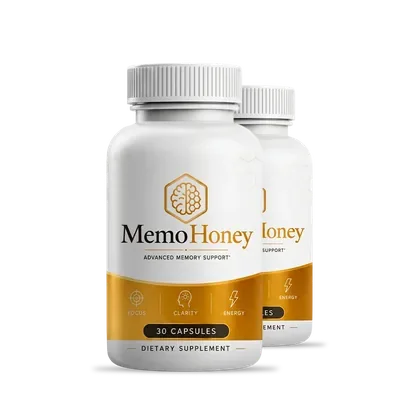
One MemoHoney serving is 1 capsule, with 30 servings per container and no proprietary blend.
Niacin 7.5 mg NE (47% DV), calcium 18 mg (1.5%), L-arginine base 200 mg, L-arginine AKG 2:1 200 mg, L-citrulline HCl 100 mg, L-citrulline malate 100 mg and beta alanine 40 mg. Other ingredients: hypromellose capsule, vegetable stearate and silicon dioxide.
Learn what each ingredient is.

Sixteen markers across the whole wrap. Most of them are about lines this label prints properly, which is not a sentence we get to write often.
Swipe the label sideways to reach every marker.
Tap a numbered marker on the label to read what that line says, and what it leaves out.
Seven lines, seven figures, no proprietary blend. This is the finding.
The FDA's labeling guide asks for the names and quantities of dietary ingredients present in your product, the Serving Size and the Servings Per Container. This panel supplies all three for all seven, which is the whole of the requirement met.
Serving Size: 1 Capsule. Servings Per Container: 30.
A single-unit serving means no multiplication is needed to read any other line, and thirty capsules at one a day is thirty days with no arithmetic at all. Both figures agree with the 30 CAPSULES printed on the front panel.
Niacin: 7.5 mg NE against the FDA's 16 mg NE Daily Value is 46.9%, which to the nearest whole percent is 47%. That is what the panel prints. Correct.
Calcium: 18 mg against a 1,300 mg Daily Value is 1.4%, which to the nearest whole percent is 1%. The panel prints 1.5% — neither the correct value nor a whole percent.
Hypromellose (Vegetable Capsule), Vegetable Stearate, Silicon Dioxide.
Three items, all ordinary, and the capsule material is named rather than hidden behind a phrase like proprietary base. It is also what the vegetarian mark on the listing is resting on.
The label prints Manufactured in the USA with globally sourced ingredients — the qualified construction the FTC describes.
The listing then carries two unqualified Made in USA roundels, which the FTC reserves for products “all or virtually all” made in the United States with “no — or negligible — foreign content”. Where the two differ, the label governs.
DISTRIBUTED BY: INSTITUTO EXPERIENCE, PO Box 12730, Ogden, UT 84404 [followed by a telephone number and an email address].
The qualifying phrase is correct under 21 CFR 101.5. The place of business is a post office box; the same rule permits a street address to be omitted only if the firm is shown in a current city or telephone directory, which we could not verify either way.
And that number is not this site's order desk, which is listed in the footer.
Seven lines, seven figures, and a total we added ourselves.
| As printed on the panel | Per capsule | % Daily Value | What it is |
|---|---|---|---|
| Niacin | 7.5 mg NE | 47% | Vitamin B3. About half an adult day's requirement, and the only nutrient here at a sensible fraction of its Daily Value |
| Calcium (as Calcium Carbonate) | 18 mg | 1.5% | 1.4% of a day's calcium by our arithmetic. Carbonate is also a common capsule filler |
| L-Arginine (base) | 200 mg | †† | An amino acid the body converts to nitric oxide. Studied at 6 to 30 grams a day |
| L-Arginine AKG 2:1 Extract | 200 mg | †† | Arginine bound to alpha-ketoglutarate. Our sources do not cover this form separately |
| L-Citrulline HCl | 100 mg | †† | A citrulline salt. Citrulline raises arginine in the blood more reliably than arginine does |
| L-Citrulline Malate | 100 mg | †† | 56.64% citrulline by weight, per the NIH. Studied at 8 grams before exercise |
| Beta Alanine | 40 mg | †† | Studied at 1.6 to 6.4 grams a day for four to eight weeks, for muscular endurance |
| Total declared per capsule | 665.5 mg | — | Our addition, from the seven printed figures. The label prints no total and is not required to. |
There is no proprietary blend. Seven dietary ingredients are declared and every one of them carries a figure. Nothing is concealed inside a total weight, nothing is described only as part of a matrix, and no ceiling arithmetic is needed anywhere on this site. Of the products this desk has reviewed, this is the first with a full house.
The footnote†† Daily Value (DV) not established.
Other ingredientsThree, as printed: Hypromellose (Vegetable Capsule), Vegetable Stearate and Silicon Dioxide.
The two percentages, recomputedNiacin: 7.5 mg NE against a 16 mg NE Daily Value is 46.9%, which to the nearest whole percent is 47% — the printed figure is correct. Calcium: 18 mg against a 1,300 mg Daily Value is 1.4%, which to the nearest whole percent is 1%. The panel prints 1.5%.
A percentage is the one number on a panel a reader can check without leaving the label. We check every one we find.
| Nutrient | Declared | % DV printed | Daily Value | Our figure | Verdict |
|---|---|---|---|---|---|
| Niacin | 7.5 mg NE | 47% | 16 mg NE | 46.9%, which to the nearest whole percent is 47% | correct |
| Calcium | 18 mg | 1.5% | 1,300 mg | 1.4%, which to the nearest whole percent is 1% | the printed figure is neither the correct value nor a whole percent |
A percentage on a panel is the one number a reader can check without leaving the label, and almost nobody does. We recompute every one we find. On this product there were two to check: one is right and one is not.
What the rule saysThe FDA’s dietary supplement labeling guide requires percentages to be expressed “to the nearest whole percent”. 1.5% is not a whole percent, and 1.4% rounds to 1% rather than to 1.5% in any case.
How much it mattersVery little, on its own. Eighteen milligrams of calcium is negligible either way and nobody’s decision turns on it. It matters as a signal: this is the only figure on an otherwise careful panel that does not survive a recalculation, and we would rather report it than quietly let it pass.
More than any other label this desk has read, and every item here is checkable against the photograph.
Every dietary ingredient carries an amount. Seven of seven. There is no proprietary blend anywhere on this panel, nothing concealed inside a total, and no ceiling arithmetic was needed anywhere on this site.
Serving size and servings per container are both printed — one capsule and thirty — and they agree with the net quantity on the front.
The niacin percentage is arithmetically correct. We recalculated it: the FDA Daily Value is 16 mg NE and 7.5 mg NE is 46.9%, which rounds to the 47% printed.
The form of the mineral is named, not just the mineral. Calcium (as Calcium Carbonate) is more specific than many labels manage.
The amino acid forms are specified too — base, AKG 2:1 extract, HCl, malate — which matters because the salt form changes what a milligram figure means.
The double-asterisk footnote is correct. The five amino acids have no established Daily Value and the symbol points at Daily Value (DV) not established, which is exactly what the FDA's guide asks for.
The other-ingredients line is complete, three items, with the capsule material named.
The suggested use is specific: a quantity, a frequency, a volume of water, a timing window and a deferral to a clinician.
The caution panel is complete, with four separate instructions including the tamper-seal line many labels omit.
A storage line is printed.
The country-of-origin wording is correctly qualified.
The FDA disclaimer is boxed and complete, on the same wrap as the claim it disclaims.
A named distributor, a telephone number and an email are printed on the bottle.
Two, and they are both small. The calcium percentage does not survive a recalculation. And the caution panel, which is otherwise thorough, does not name the one interaction specific to this formula — the arginine, the heart and nitrates.
The supplied label image is 1259 by 567 pixels. Every line on this page was read at that resolution, and the facts panel was enlarged three times over to read the amounts and the salt forms character by character.
Both printed figures were recomputed against the FDA's published Daily Values — 16 mg NE for niacin, 1,300 mg for calcium. One is right. One is not. We publish both results.
665.5 mg is the sum of the seven printed amounts. The label prints no total and is not required to, so wherever that figure appears on this site it is marked as our arithmetic.
The label prints AKG 2:1 and HCl. Our sources give a conversion for citrulline malate and for neither of those, so this site publishes none for them.
The bottle wins. If any amount, ingredient, percentage or instruction on your own label differs from what is transcribed here, follow your bottle and send us the photograph through the website inbox in the footer. We will correct the page and say that we did.
Per capsule: niacin 7.5 mg NE, calcium as calcium carbonate 18 mg, L-arginine base 200 mg, L-arginine AKG 2:1 extract 200 mg, L-citrulline HCl 100 mg, L-citrulline malate 100 mg and beta alanine 40 mg. Other ingredients: hypromellose vegetable capsule, vegetable stearate and silicon dioxide. The seven declared amounts come to 665.5 mg, which is our addition rather than the label's.
No, and it is the best thing about this label. Every dietary ingredient carries a printed amount. Nothing is concealed inside a total weight, nothing is described only as part of a matrix, and the panel can be added up by anyone with a calculator. Of the products this desk has reviewed, this is the first with a full house.
We added the seven printed figures: 7.5 + 18 + 200 + 200 + 100 + 100 + 40. The label does not print a total and is not required to. We publish ours as ours.
Yes. The Daily Value for niacin is 16 mg NE and 7.5 divided by 16 is 46.9%, which to the nearest whole percent is 47%. We checked it for the same reason we checked the calcium.
No. The FDA's Daily Value for calcium is 1,300 mg, and 18 divided by 1,300 is 1.4%, which to the nearest whole percent is 1%. The FDA's labeling guide says percentages must be expressed to the nearest whole percent. It is a small error about a small quantity and it changes nothing a buyer would do, but we recalculate every printed percentage and we publish what the recalculation finds.
The label: store in a cool, dry place away from heat and light. No temperature is given, so use the ordinary reading — a cupboard rather than a windowsill or a bathroom shelf.
Not published in anything supplied to us. The brief says the lot and best-before appear on the base of the bottle when the bottle shows them.
The manufacturer is not named. The label prints Distributed by: Instituto Experience, PO Box 12730, Ogden, UT 84404, with a telephone number and an email. 21 CFR 101.5 requires the name and place of business of the manufacturer, packer or distributor, and permits a street address to be omitted only if it is shown in a current city or telephone directory. We could not verify that either way.
The label prints a number with a 507 area code beside the distributor block. The brief supplied for this site gives a different one, listed in the footer, as the sales and refund desk. beside the distributor block. This site's order desk is the order desk (its number is in the footer). For an order placed here, use the number on this site, because that is the desk with the order record.
MEM-26/ME-7647, with the certificate reference MEM-7647-26-ME. The pack's own note says these are draft labels rather than lab proof, and we publish them on that basis.
Natural has no regulatory definition for a dietary supplement. This formula is five isolated amino acid compounds, a mineral salt and synthesised niacin, in a hypromellose capsule with silicon dioxide.
One bottle is 30 capsules at one a day, so a bottle is thirty days and the 60-day guarantee still has thirty left to run when it ends. The guarantee runs from purchase, not from delivery, and the price is shown at checkout.
Order NowRead the label firstNo price was published to us. We print no figure we have not seen ourselves. · 60-day guarantee from purchase · Not for under 18, pregnancy or nursing